
Lithium battery temperature range and BESS thermal management
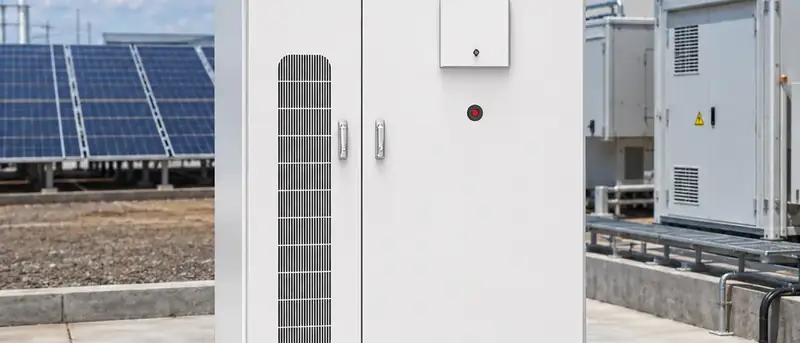
The lithium battery temperature range depends on what the cell is doing. Typical LiFePO4 (LFP) storage cells allow charging from about 0 °C to 45–55 °C and discharging from about -20 °C to 55–60 °C, but they age slowest at roughly 15–35 °C. A battery energy storage system therefore heats and cools its cells to stay near that band, whatever the outdoor climate.
Key takeaways
- Charging is the most temperature-sensitive operation. Charging an LFP cell near or below 0 °C risks lithium plating, which permanently reduces capacity and can create internal short circuits.
- High temperature accelerates ageing long before it becomes a safety issue. Cells that run hot every day lose capacity faster, even within their datasheet limits.
- Datasheet limits are cell limits. The system's ambient range is a different figure that depends on the thermal management design and any power derating.
- For storage and shipping, keep cells cool and dry at a partial state of charge, and follow the supplier's maintenance-charge interval.
- Ask suppliers for the derating curve and the guaranteed cell temperature spread, not only the headline ambient range.
What is the normal lithium battery temperature range?
There are three different ranges on a typical cell datasheet: charge, discharge and storage. The figures below are typical of large-format LFP storage cells and general lithium-ion (NMC) cells. They are indicative only: always design to the specific cell datasheet.
| Condition | Typical LFP storage cell | Typical NMC cell | Notes |
|---|---|---|---|
| Charging | About 0 °C to 45–55 °C | About 0 °C to 45 °C | Charge current is usually reduced near both limits |
| Discharging | About -20 °C to 55–60 °C | About -20 °C to 60 °C | Available capacity and power fall sharply in the cold |
| Preferred operating band | About 15–35 °C | About 15–35 °C | Cycle-life ratings are commonly tested at 25 °C |
| Short-term storage (weeks) | Often quoted around -20 °C to 45 °C | Similar | Partial state of charge |
| Long-term storage (months) | Cool and dry, near room temperature or below | Similar | Partial state of charge, periodic checks |
Because LFP cells are built into modules and racks, the temperature that matters is the cell temperature measured by the battery management system (BMS), not the air in the room.
What is the LiFePO4 temperature range for charging and discharging?
LFP chemistry is more thermally stable than nickel-based chemistries at high temperature, but it shares the same low-temperature weakness.
Charging in the cold. At low temperature the graphite anode cannot absorb lithium ions quickly enough. Instead of intercalating, some lithium deposits as metal on the anode surface. This lithium plating is largely irreversible: it removes active lithium, raises internal resistance and, in severe cases, grows dendrites that can pierce the separator. That is why the BMS blocks or heavily limits charging below a set threshold, typically around 0 °C, and reduces the allowed charge current as the temperature falls towards that point.
Discharging in the cold. Discharging is allowed at lower temperatures because it does not plate lithium, but internal resistance rises. Usable capacity falls and voltage sags under load, so the system may hit its low-voltage cut-off early.
Operating hot. Above roughly 35 °C, unwanted side reactions speed up: the solid electrolyte interphase (SEI) layer on the anode thickens and the electrolyte slowly decomposes. Capacity fade and resistance growth both accelerate. Near the upper datasheet limit, the BMS derates power to stop the cells heating further. Thermal runaway itself starts at much higher temperatures, but a system that runs hot every day will reach end of life early.
For more on how LFP compares with other chemistries, see LFP vs NMC: types of lithium-ion batteries.
Why does lithium-ion battery operating temperature affect cycle life?
Cycle-life figures such as "6,000 cycles" are measured under controlled conditions, usually at around 25 °C, at a stated C-rate and depth of discharge. Every degree of sustained deviation, especially upwards, moves real performance away from that figure.
Two mechanisms drive this:
- Calendar ageing happens even when the battery is idle. It is faster at high temperature and at high state of charge (SOC). A battery parked full in a hot container ages faster than one held at a moderate SOC in a cool one.
- Cycle ageing depends on temperature during charge and discharge. Cold charging risks plating; hot cycling speeds SEI growth.
Temperature spread matters as much as average temperature. Cells in a rack are connected in series, so the warmest cells age fastest and the weakest cell limits the whole string. A design that holds every cell within a few degrees of its neighbours keeps capacity more even across the system. This is the main reason most new containers and C&I cabinets use liquid cooling; our comparison of liquid cooling vs air cooling for BESS covers the trade-offs.
How does a BESS keep cells in the right temperature range?
A storage system has to handle desert heat, cold nights and its own heat from charging and discharging. A typical thermal management system includes:
- Cell temperature sensing. Sensors at module level feed the BMS, which reports minimum, maximum and average cell temperatures.
- Liquid cooling. A water-glycol coolant flows through cold plates under or beside the cells. A chiller unit rejects the heat to outside air.
- Heating. In cold climates the same coolant loop is heated, or electric heaters warm the modules, so that cells reach a safe charging temperature before the system accepts charge.
- Enclosure insulation and sealing. Insulated walls reduce heat gain from sun and heat loss in winter. Sealing to a suitable IP rating keeps out dust and moisture.
- Air conditioning for electronics. The PCS, control equipment and BMS boards may have their own cooling or ventilation needs.
- Derating logic. The energy management system reduces charge or discharge power when cell temperatures approach the limits.
The auxiliary energy used for heating and cooling is a real cost. It rises with ambient temperature, solar gain and C-rate, so ask for an estimate of annual auxiliary consumption at your site. Our guide on how to size a BESS container shows how auxiliary load affects usable energy and round-trip efficiency.
Toppower Asia's liquid-cooled storage cabinets, including the outdoor 372 kWh cabinet with liquid thermal management, and our containerised battery storage systems are configured with integrated liquid cooling for this reason.
What about extreme climates?
Hot climates. In deserts and the tropics, the challenge is rejecting heat when outdoor air is already at 45 °C or more. Check the chiller capacity at your maximum design ambient, the effect of direct sun on the enclosure, and whether the system derates in the hottest hours, which are often exactly when you need it to discharge. Light-coloured enclosures, shading and good spacing for airflow all help. The Australia 5 MWh liquid-cooled BESS application example shows a representative configuration for a hot site.
Cold climates. Below freezing, the system must heat cells before charging. If the battery sits idle for long periods, it may need grid or self-supplied power to stay warm, so include that in the auxiliary budget. Coolant must have enough glycol for the lowest site temperature.
Altitude. Thin air reduces the cooling capacity of air-cooled components such as chillers and PCS, and may require derating. Give the supplier the site altitude at enquiry stage.
What is the right lithium battery storage temperature?
Lithium battery storage temperature matters during shipping, warehousing and commissioning delays, which can stretch to months on large projects.
Good practice for stored LFP modules and racks:
- Keep them in a cool, dry, ventilated place out of direct sun, ideally close to room temperature.
- Store at a partial state of charge as specified by the supplier. Many suppliers recommend roughly 30–50% SOC; avoid both full and nearly empty.
- Check voltage at the interval the supplier specifies, often every few months, and carry out a maintenance charge if needed.
- Do not charge modules that have been stored below 0 °C until they have warmed up.
- Record storage conditions; they can affect the warranty.
Lithium batteries are classed as dangerous goods for transport, with their own packing and documentation requirements. Our article on shipping transformers and BESS covers this in more detail.
Frequently asked questions
What is the safe temperature range for LiFePO4 batteries?
Typical LFP storage cells can be charged from about 0 °C to 45–55 °C and discharged from about -20 °C to 55–60 °C. They last longest at roughly 15–35 °C. Exact limits vary by cell, so use the manufacturer's datasheet.
Can you charge a lithium battery below freezing?
Not safely at normal rates. Charging graphite-anode lithium-ion cells, including LFP, below about 0 °C can cause lithium plating that permanently reduces capacity. Storage systems for cold climates include heaters, and the BMS blocks charging until cells are warm enough.
What is the ideal lithium-ion battery operating temperature?
Around 15–35 °C, with most cycle-life tests run at about 25 °C. Keeping cells within this band and close to each other in temperature gives the best balance of performance and ageing.
How hot is too hot for a lithium battery?
Above about 45–55 °C during charging, or about 55–60 °C during discharge, most cells are at or beyond their datasheet limits and the BMS will derate or stop operation. Sustained operation above about 35 °C, even within limits, shortens service life.
Does a battery storage container need air conditioning?
It needs active thermal management. Most modern containers and cabinets use liquid cooling for the cells, often with a separate air-conditioning or ventilation system for electronics. Small, low C-rate systems in mild climates can still use air cooling.
To check whether a storage system suits your climate, send us your site temperature range, altitude, load profile and single-line diagram and our engineering team will return a technical proposal with the thermal management configuration.